When people decide to travel to Andalusia, stopping in Almería is rarely part of the plan.
In fact, many travellers would struggle to even locate it on a map (quick hint: it’s in the southeast of Spain).
And this is both one of Almería’s strengths and weaknesses: while it’s not as well connected or as well known as other parts of Andalusia, it remains a hidden Mediterranean gem—largely untouched, not overcrowded, and still relatively unknown… yet full of things to do.
I’m so convinced of this that we actually built a business here focused on Spanish immersion experiences, bringing international visitors to practise Spanish while discovering the region.
Every year, we convince students from different countries to choose Almería—out of all the places they could visit in Spain—to explore it while improving their Spanish.
And I’m not just talking about things to do in Almeria city, but across the entire province: outdoor activities, culture, gastronomy, unspoilt beaches with crystal-clear waters, mountains, Europe’s only natural desert, historical heritage, film locations and a rich cultural legacy.
In this article, I’ll walk you through one of our 5-day Spanish immersion experiences, where students travel across Almería while taking part in activities designed to help them practise Spanish in real-life situations.
Whether you’re a Spanish learner or simply a traveller, this guide will help you if you’re wondering about things to see in Almería.
How to Get to Almería
Let’s be honest: getting to Almería isn’t always straightforward.
Especially if you’re travelling from abroad, like many of our students.
It doesn’t have the same level of connectivity as cities like Málaga or Seville, but with a bit of planning and patience, you can absolutely get here.
By Plane
Almería does have an airport—although it’s not particularly well connected.
If you’re travelling from within Spain, you’ll most likely need a connection via Madrid (Iberia, Air Nostrum, Vueling) or Barcelona (Vueling).
From Madrid, there are daily flights. From Barcelona, weekly.
If you’re travelling from the UK, you’ll find flights from:
- Gatwick
- Stansted
- East Midlands
(mainly in high season, with airlines such as easyJet, Jet2 and Ryanair).
From Germany, there are direct flights from Munich and Düsseldorf, mainly in summer, with Lufthansa and Eurowings.
You can also find flights from Belgium, the Netherlands, and more recently Poland.
The airport is just 9 km from the city centre, and there’s a local bus every 30 minutes (around €1.05—look for line L30).
Taxis cost around €30 (phone numbers: +34 950 22 22 22 / +34 950 25 11 11).
By Car, Train or Bus
If flights don’t suit you, the closest major hubs are Málaga, Alicante, Murcia and Granada. All of them are connected to Almería by bus and train.
From there, you can travel by:
- Train (note: Granada is the only direct connection)
- Bus
- Car (rental or car-sharing)
Approximate driving times:
- Málaga: 3 hours
- Granada: 2 hours
- Murcia: 2.5 hours
- Alicante: 3 hours
Where to Stay in Almería City
For our students, we usually offer three options:
- Hotel
- Student residence
- Host family
But if you’re visiting as a traveller, hotels are probably your best bet—especially if you want easy access to the city and its food scene.
Things to Do in Almería
What I’m about to show you is one of the programmes we run for Spanish learners visiting Almería through language immersion tourism.
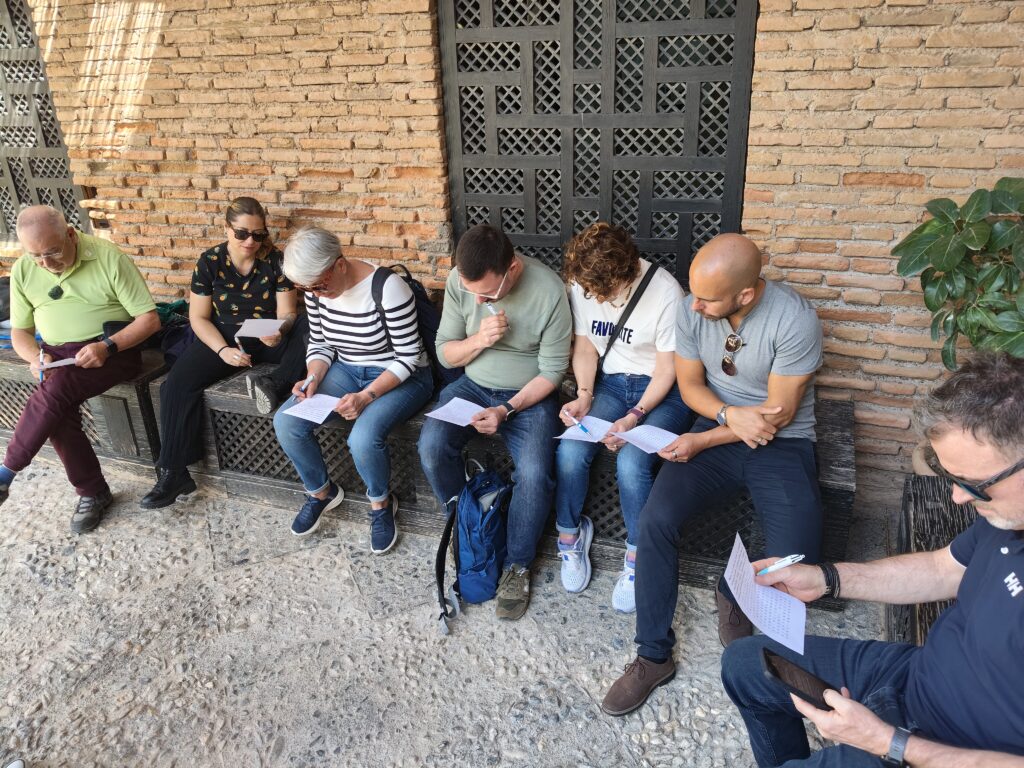
It’s a 5-day experience where students are fully surrounded by Spanish through activities, excursions, guided visits, cultural workshops and a few classes.
We combine things to do in Almería city with experiences across the wider region.
Almería is not only a great travel destination—it’s also an incredible place to practise Spanish, precisely because it’s not overcrowded. Many visitors end up using Spanish from day one.
Day 1: Exploring Almería City & Old Town
Many students arrive the day before, settle in, and get ready for the first full day.
Tapas in Almería
We usually start around lunchtime in a traditional tapas bar such as La Cabaña del Tío Tom (known for its huge variety of tapas).
Reservations aren’t possible, so it’s best to arrive early.
Along the way, we recommend more places to try tapas—remember, in Almería, tapas are included with your drink.
Historic Centre
After getting a taste of local food culture, we head into the old town.
We visit:
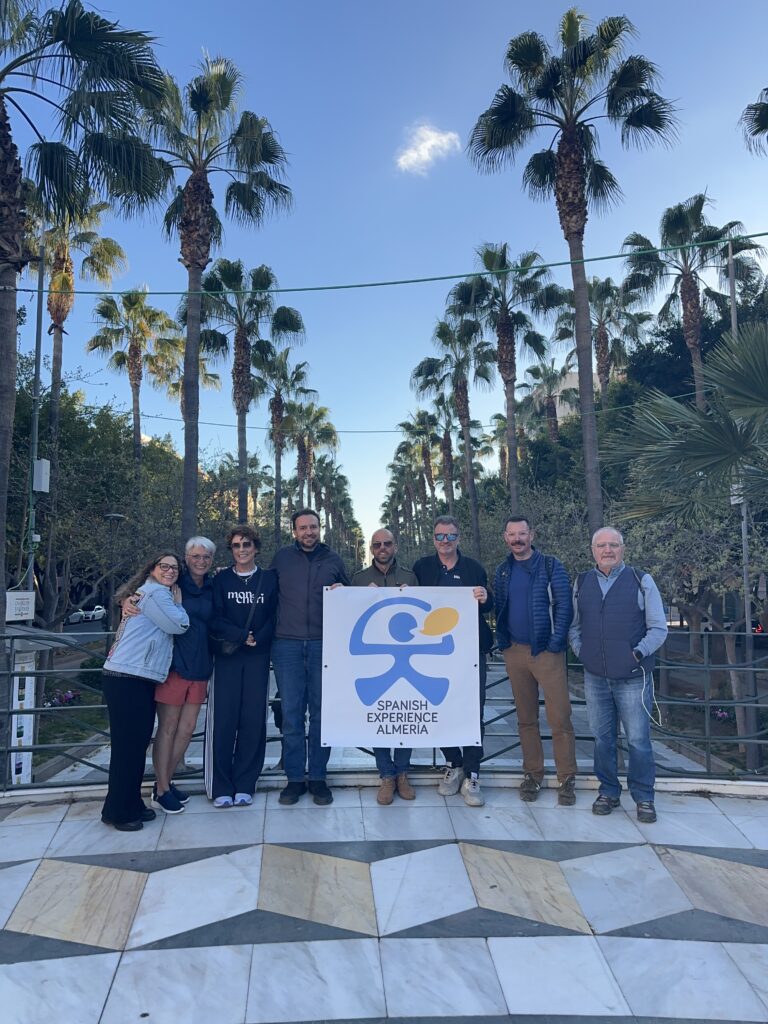
- Puerta de Purchena (the city centre)
- The Butterfly Building (look closely—you’ll spot a glass embedded at the top)
Plaza Vieja
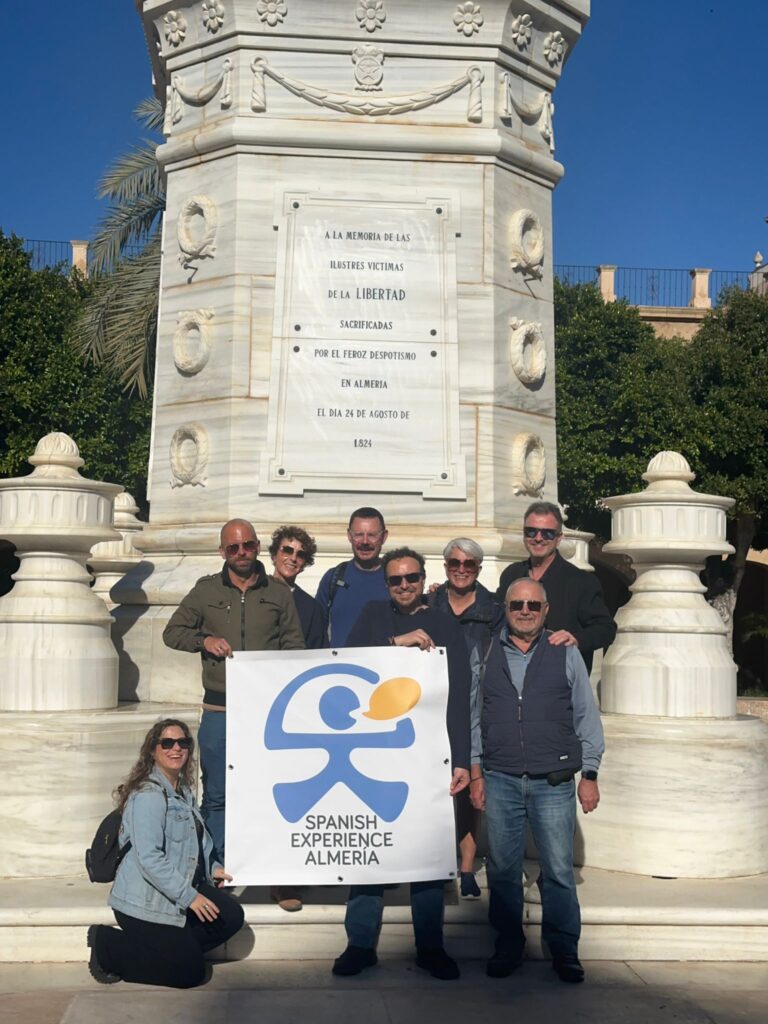
Next, we head to Plaza de la Constitución (Plaza Vieja), where you’ll find:
- The Town Hall
- The “Coloraos” monument
This monument commemorates a group of men executed for defending the Spanish Constitution.
Cathedral of Almería
We then walk to the Cathedral of the Incarnation—one of the few fortified cathedrals in Spain, built to defend against pirates and attacks.
The Cable Inglés & Seafront
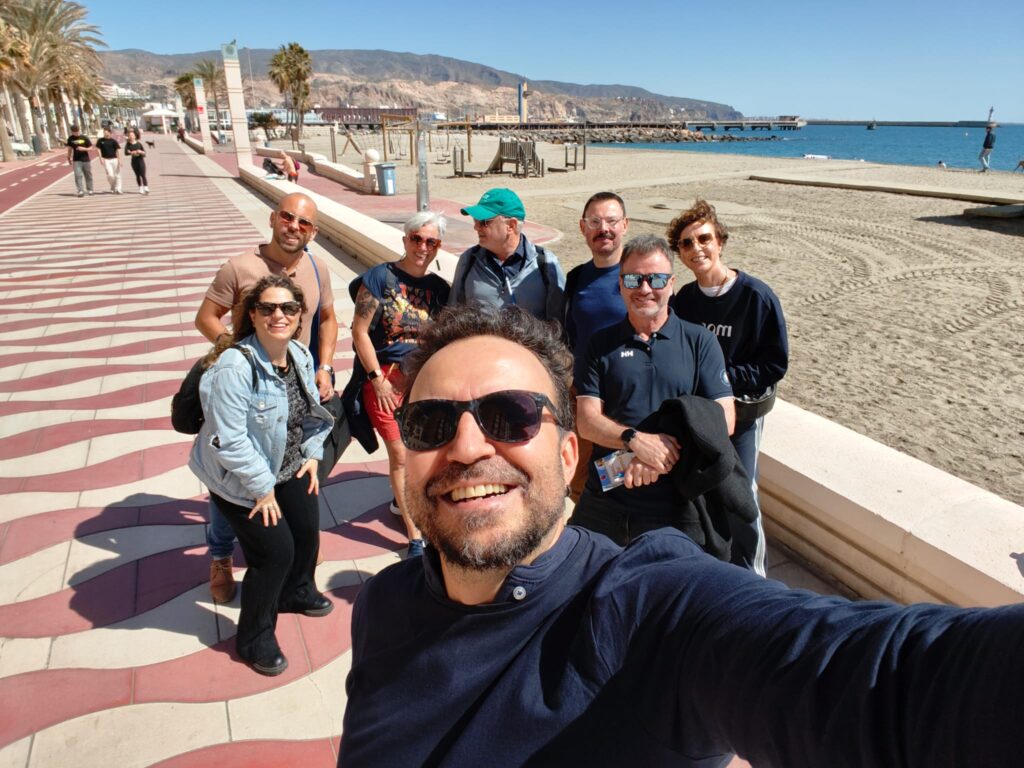
From there, we walk down Las Ramblas towards the sea.
On the way:
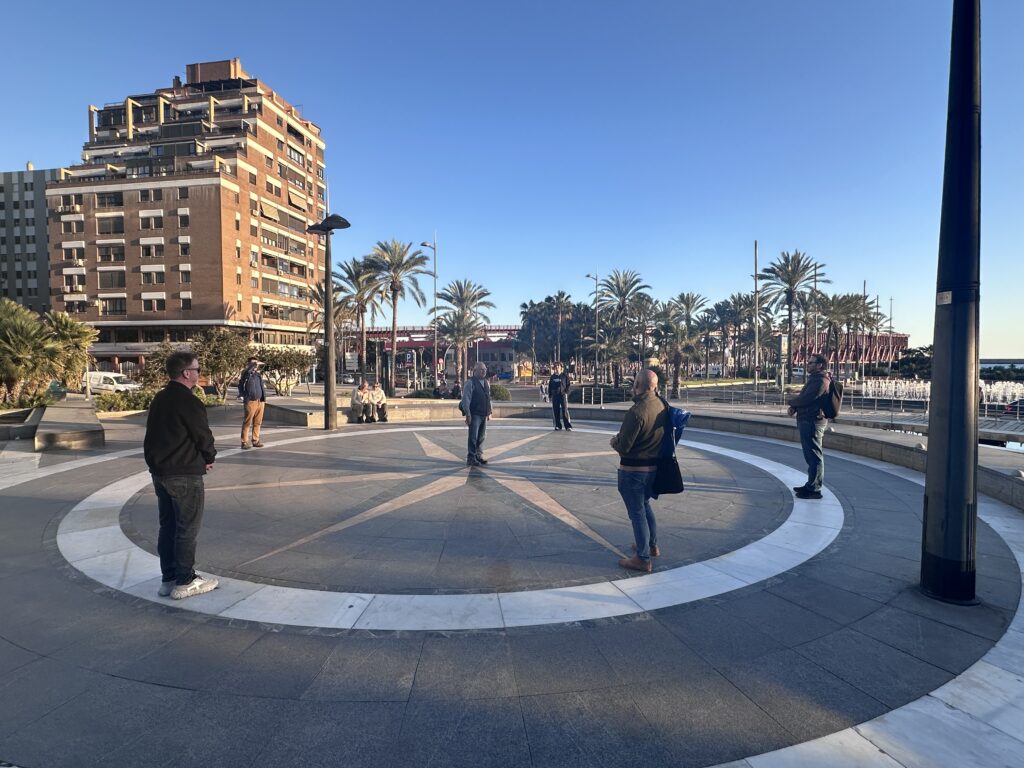
- Stop at the Rosa de los Vientos (with a curious acoustic feature—try it yourself)
- Pass through Nicolás Salmerón Park
- See Puerta del Mar, part of the old Arab wall
Finally, we reach:
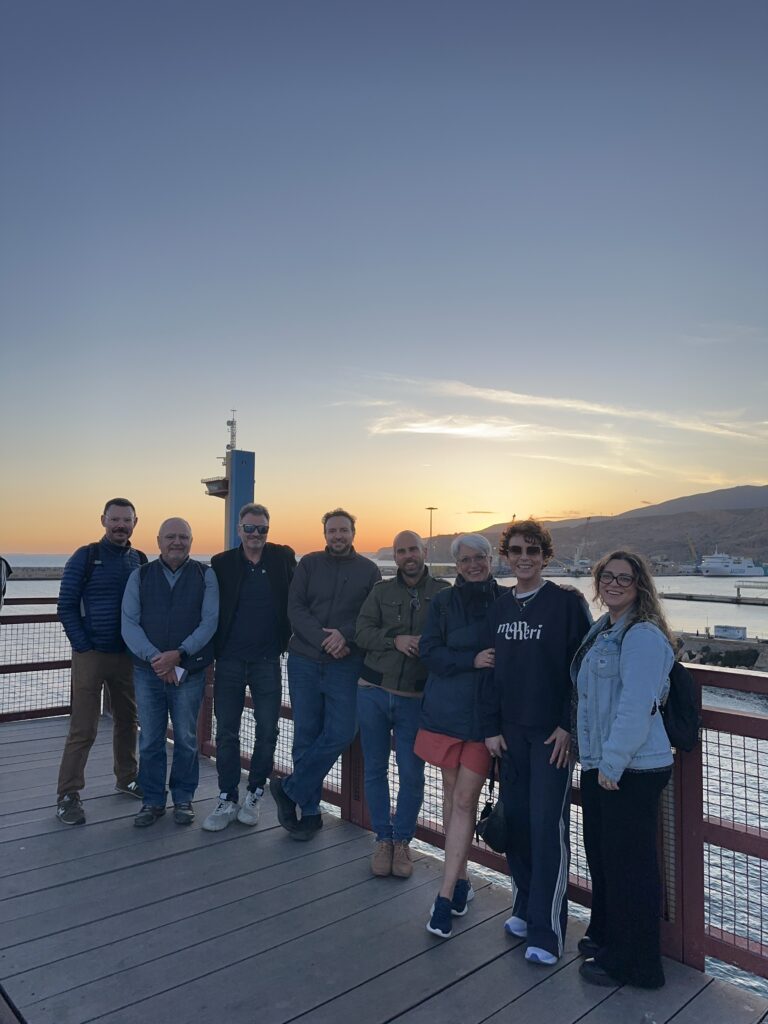
- The historic train station
- The Cable Inglés (a former industrial structure, now open to pedestrians)
It’s one of the best places in the city to watch the sunset.
Day 2: Tabernas Desert
We leave the city to explore one of Almería’s biggest treasures: the only natural desert in Europe.
Not a sandy desert like in films—but a dry, rugged landscape.
This is where many famous films were shot, including:
- Sergio Leone westerns
- Lawrence of Arabia
- Indiana Jones
- Game of Thrones
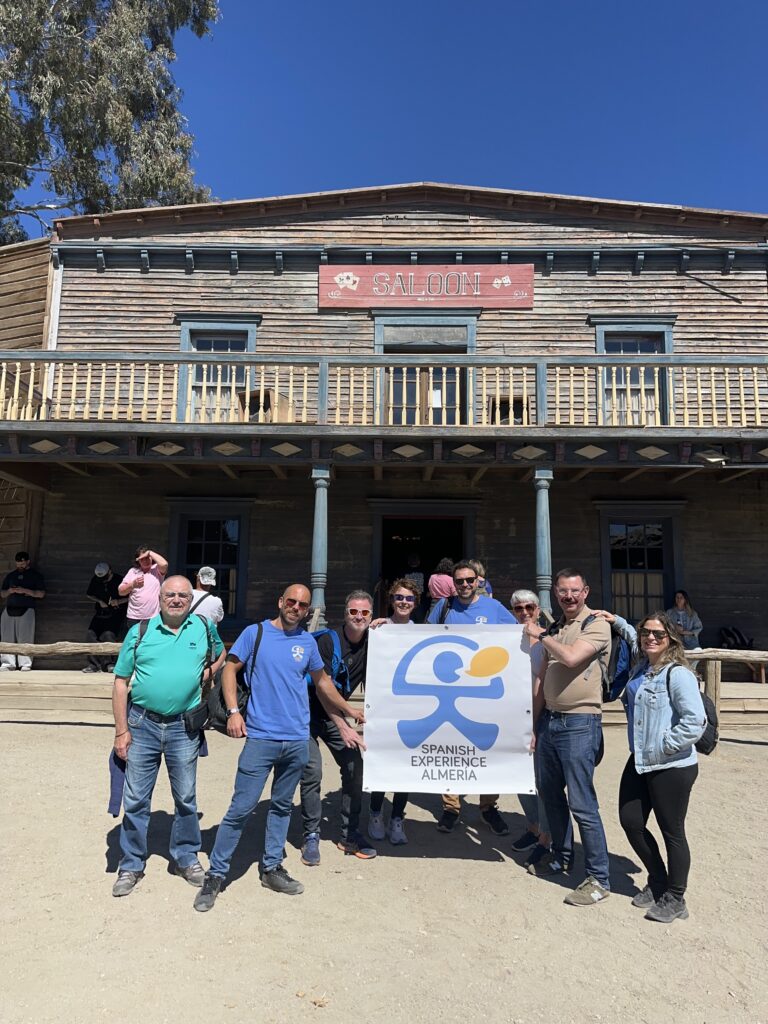
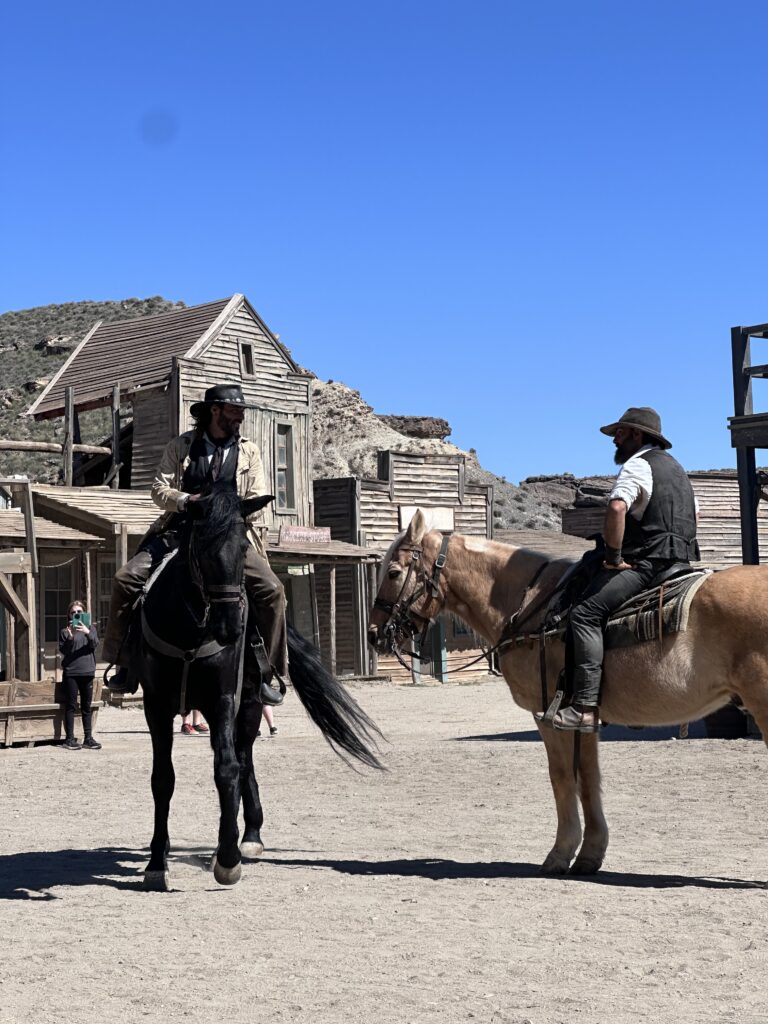
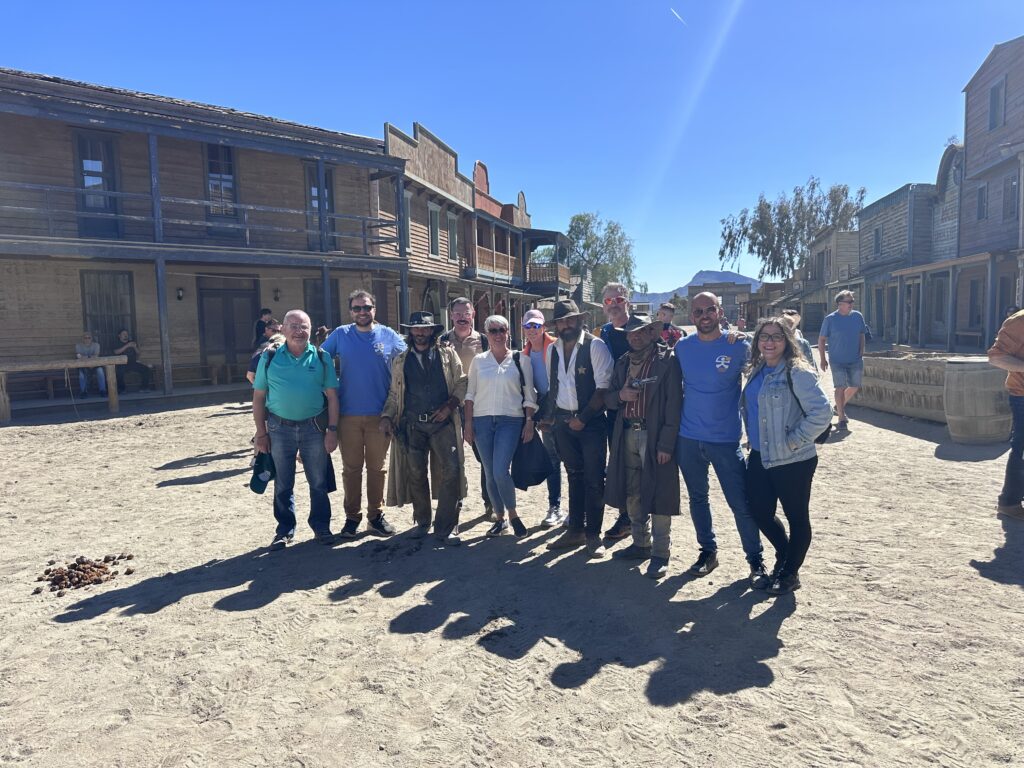
Fort Bravo
The old western film sets are still preserved there. Instead of dismantling them, they were kept and later turned into theme parks such as Fort Bravo.
In this space, you’ll find a recreation of a Wild West town, with live performances by actors — including cowboys shooting at each other — horse and cart rides, and plenty of corners that will probably remind you of films you’ve seen before.
We were unlucky enough to find Oasys MiniHollywood closed, but if you’re looking for a larger place where you can spend the whole day, it’s located right next to Fort Bravo.
4×4 Route through the Desert
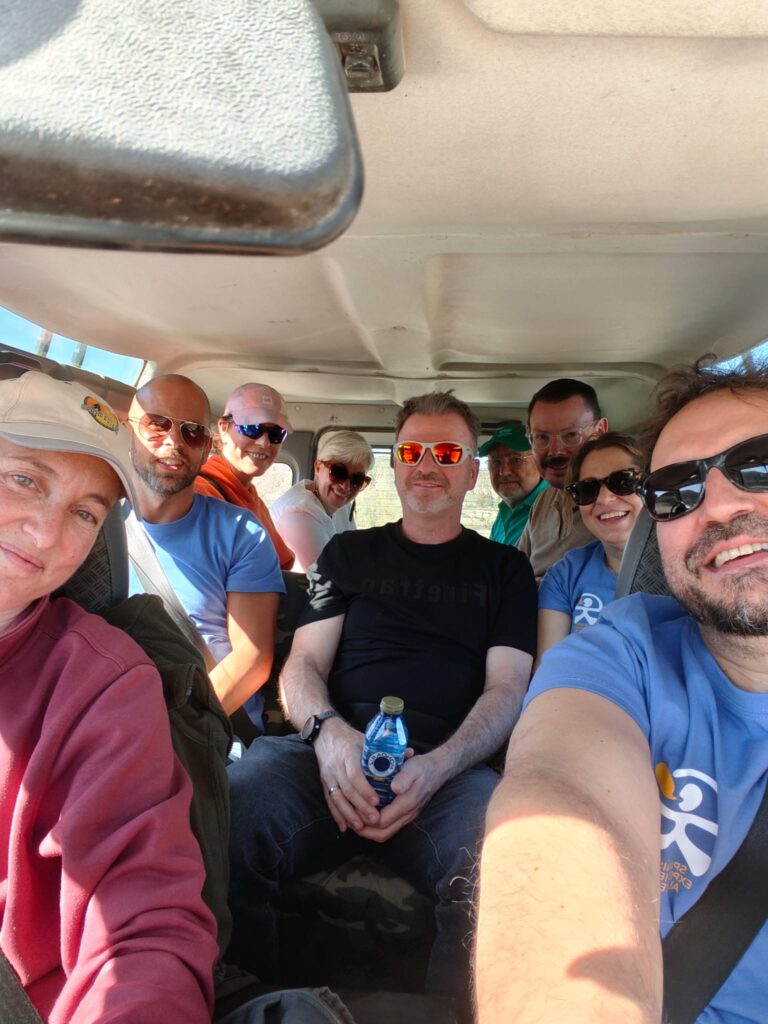
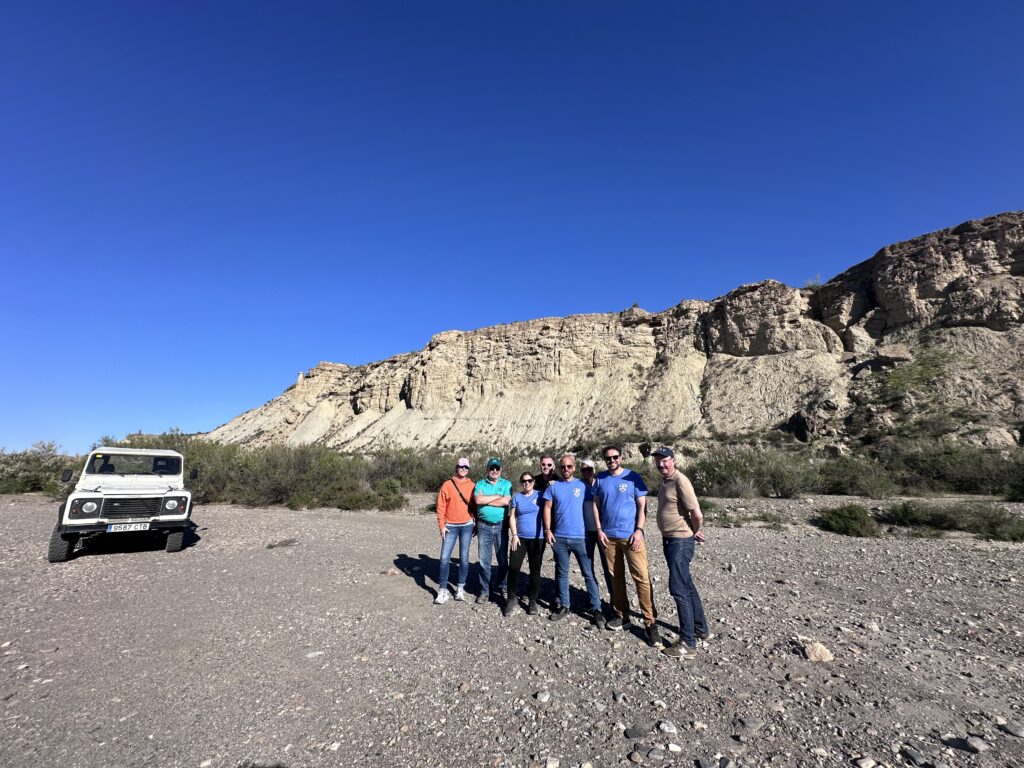
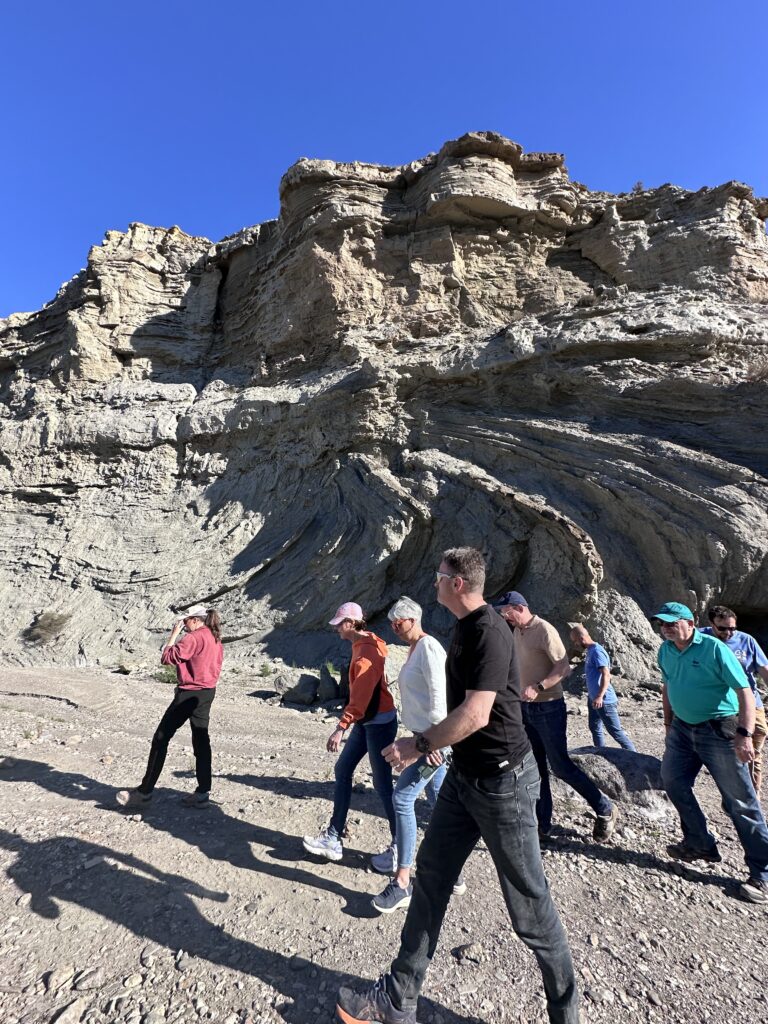
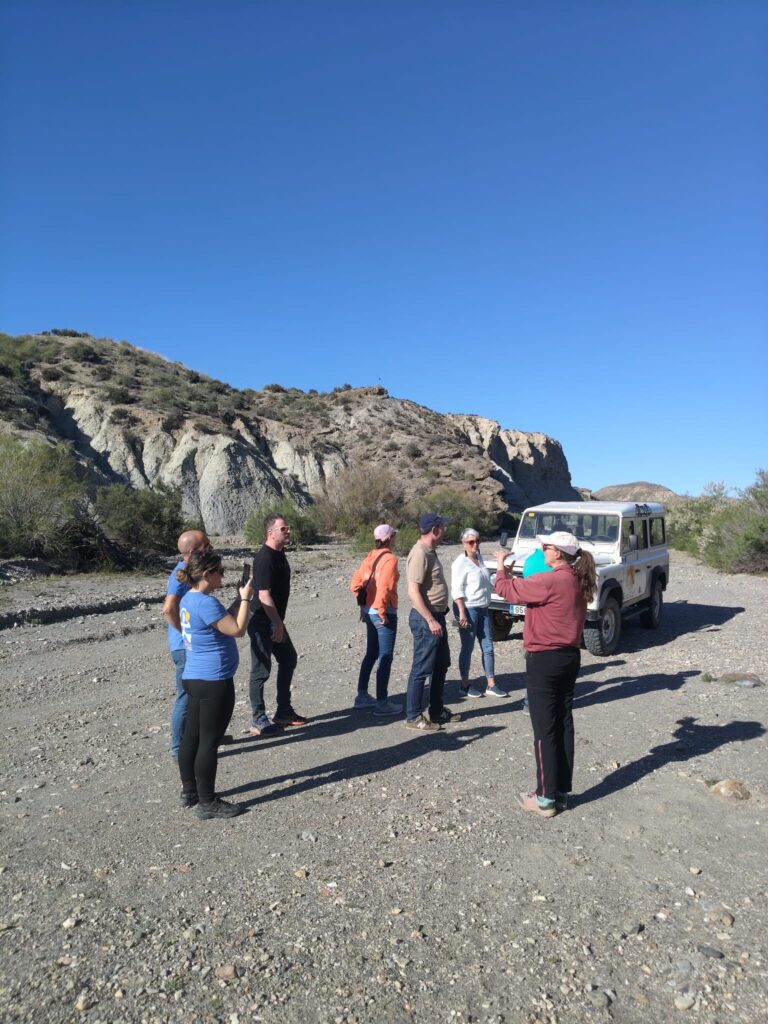
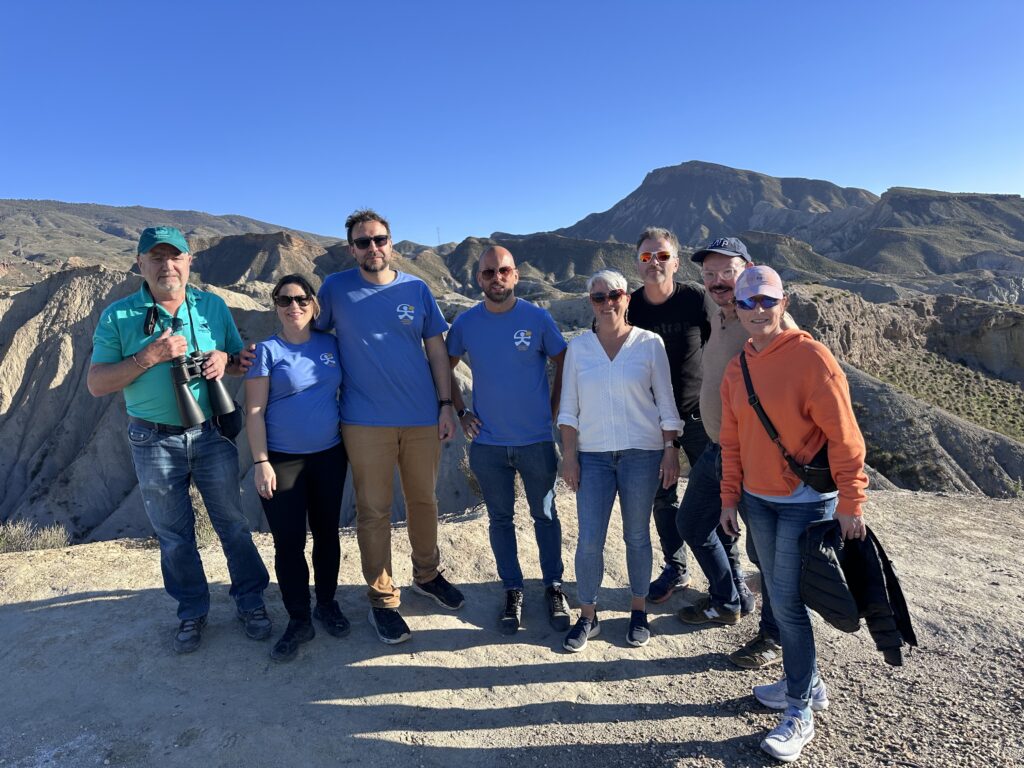
To finish the day, we decided to book a guided 4×4 tour through the Tabernas Desert.
During this trip, together with a specialised guide, we discovered the local wildlife, plants and the geological richness of the area.
Did you know that this entire desert was underwater millions of years ago?
This is definitely one of the most unusual things to do in Almería if you want to see a completely different side of southern Spain.
Day 3: Cabo de Gata-Níjar
You simply can’t leave Almería without visiting its famous Cabo de Gata.
The province is home to more than 350 kilometres of coastline, filled with unspoilt beaches and natural landscapes that many international tourists still don’t know about (except in summer, when it gets busier with Spanish visitors).
This part of the trip alone easily ranks among the top things to do in Almería, especially if you’re looking for nature, authenticity and landscapes that still feel untouched.
The White Village of Níjar
We decided to start day three with a proper local breakfast in the city — churros. For some of our students, it’s their first time trying them.
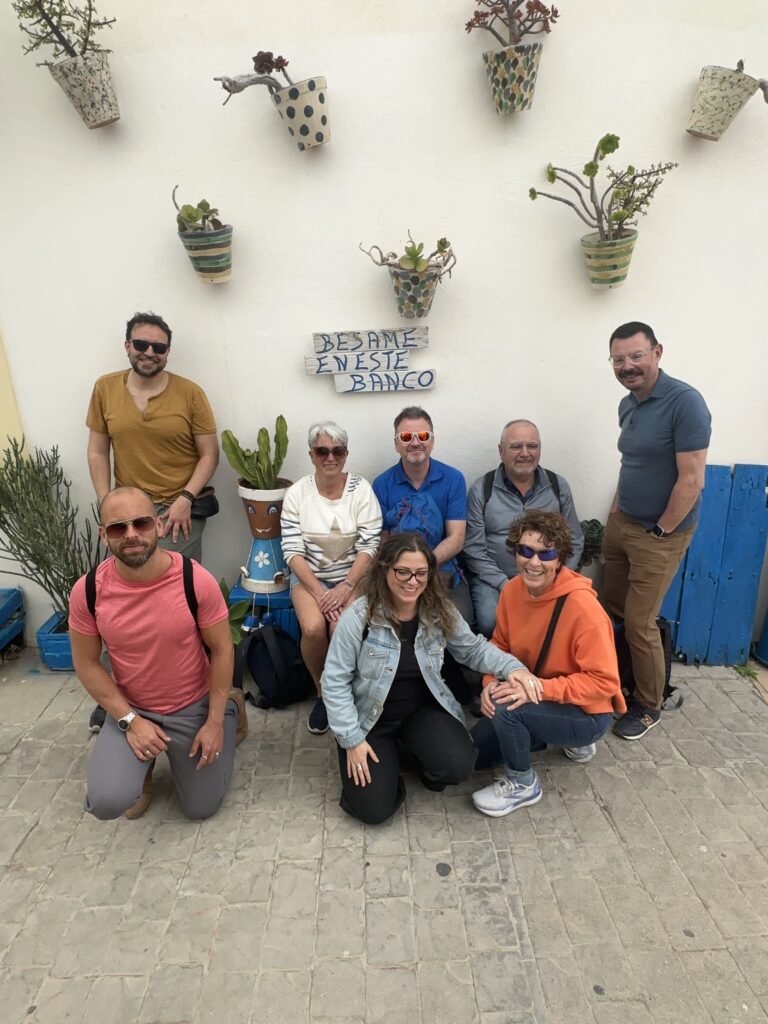
After that sugar and cholesterol boost, we get in the car and head towards one of the most beautiful villages in Spain: Níjar, a place with a strong artisan tradition.
In this whitewashed village, you’ll find:
- Pottery shops selling vases, bowls and handmade clay pieces
- Textile crafts made from esparto grass and traditional jarapas (I even bought one for my bed for around €20)
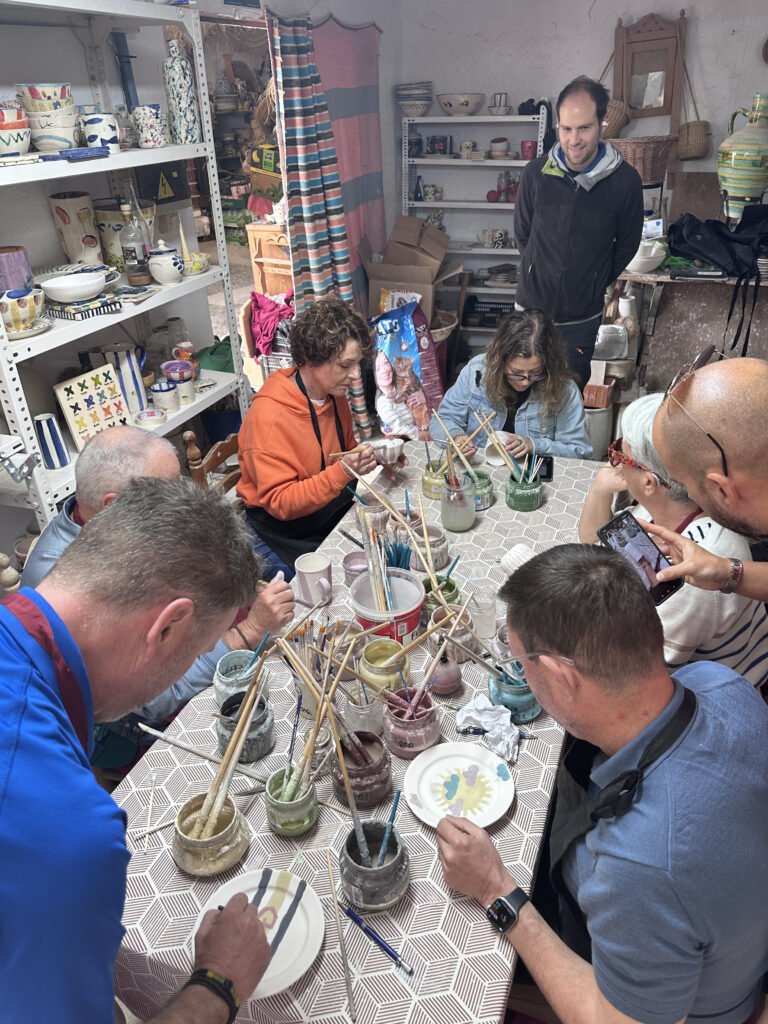
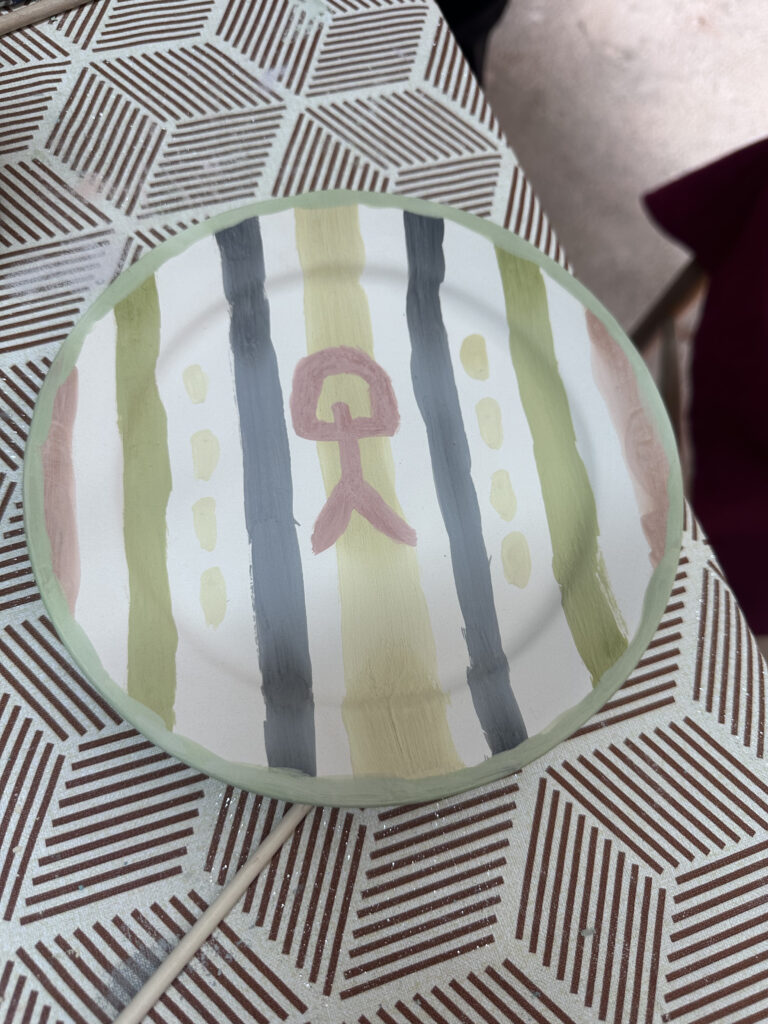
We also make sure our students take something personal with them, so we visit a painting workshop where they design and decorate their own ceramic pieces. In the original experience, we even painted our own mugs 🙂
To wrap up our time in Níjar, we wander through its streets, getting lost on purpose. We walk up to the Torreón viewpoint, where you get some of the best panoramic views of the village, with the so-called “Sea of Plastic” in the background and Cabo de Gata ahead — our next stop.
Cabo de Gata and “El Playazo de Rodalquilar”
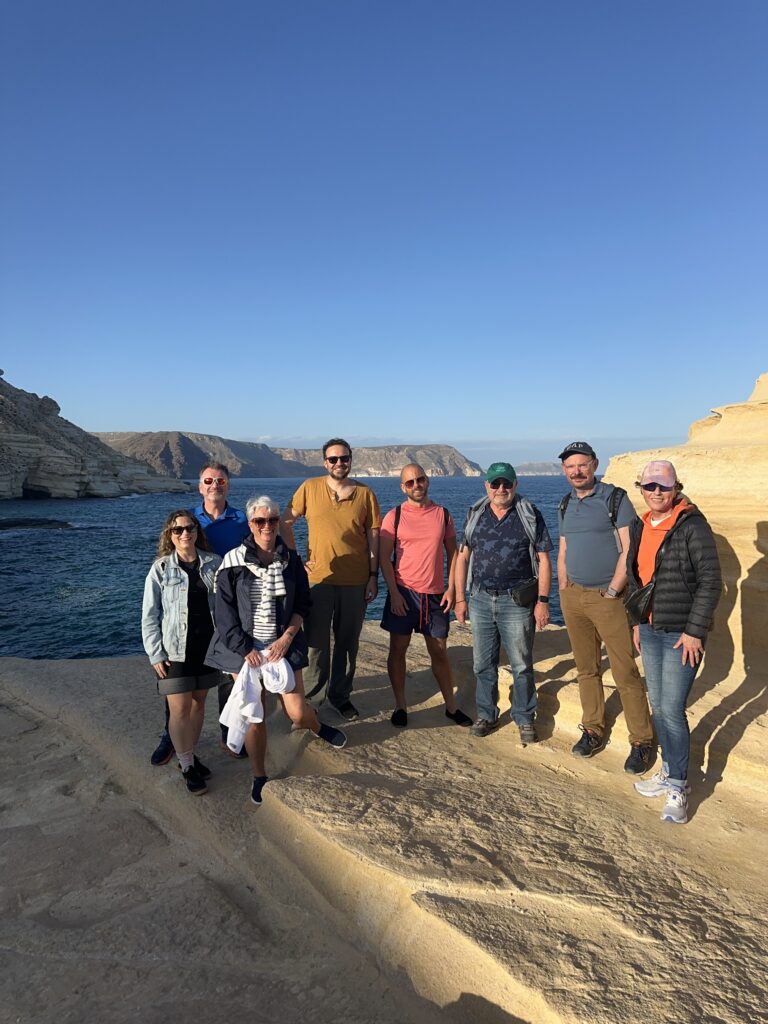
Cabo de Gata originally refers to a small fishing village on the Almería coast, but today the name is used for a much larger area — over 50 kilometres of coastline filled with cliffs, wild beaches, hidden coves and crystal-clear waters.
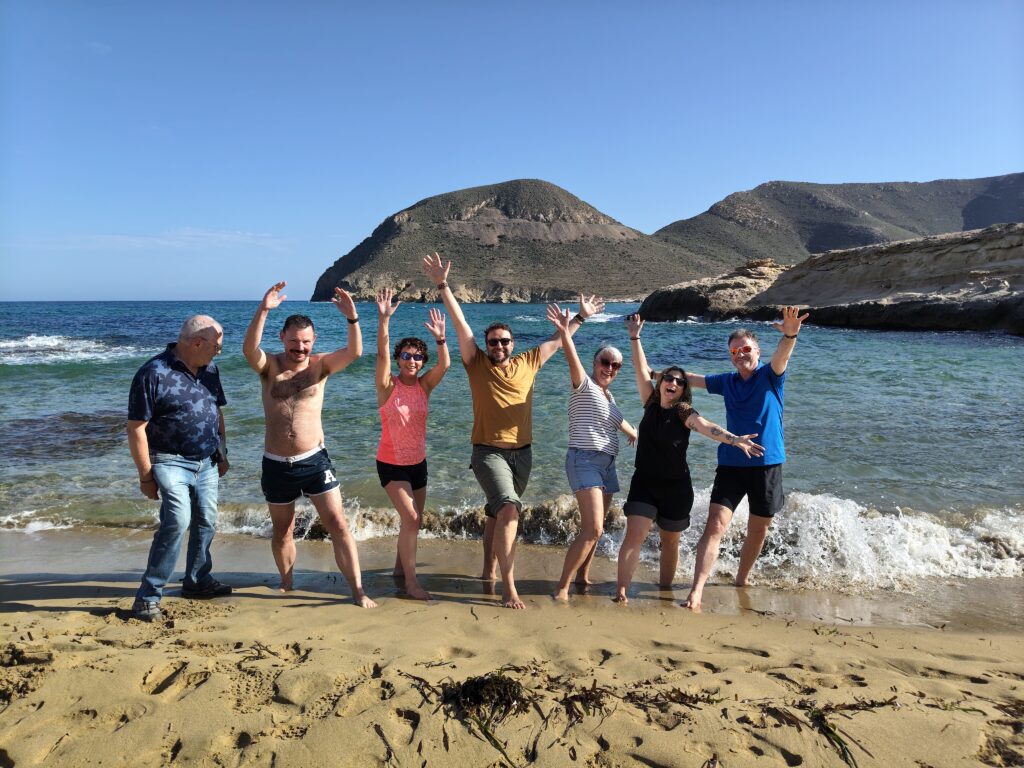
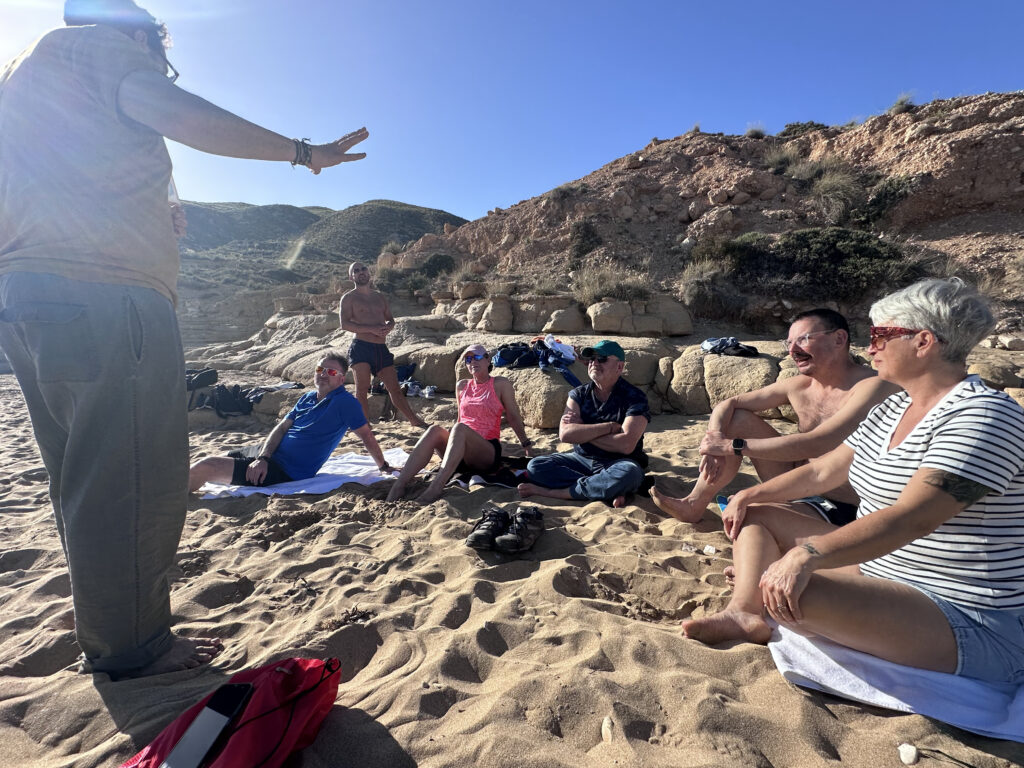
We had to choose where to spend a March afternoon, and we went for one of the best beaches in the area: El Playazo de Rodalquilar.
It’s:
- A volcanic beach
- Easy to access
- Family-friendly
- Covered in golden sand
And at that time of year (March), we had it completely to ourselves.
We even went for a swim.
The Amatista Viewpoint
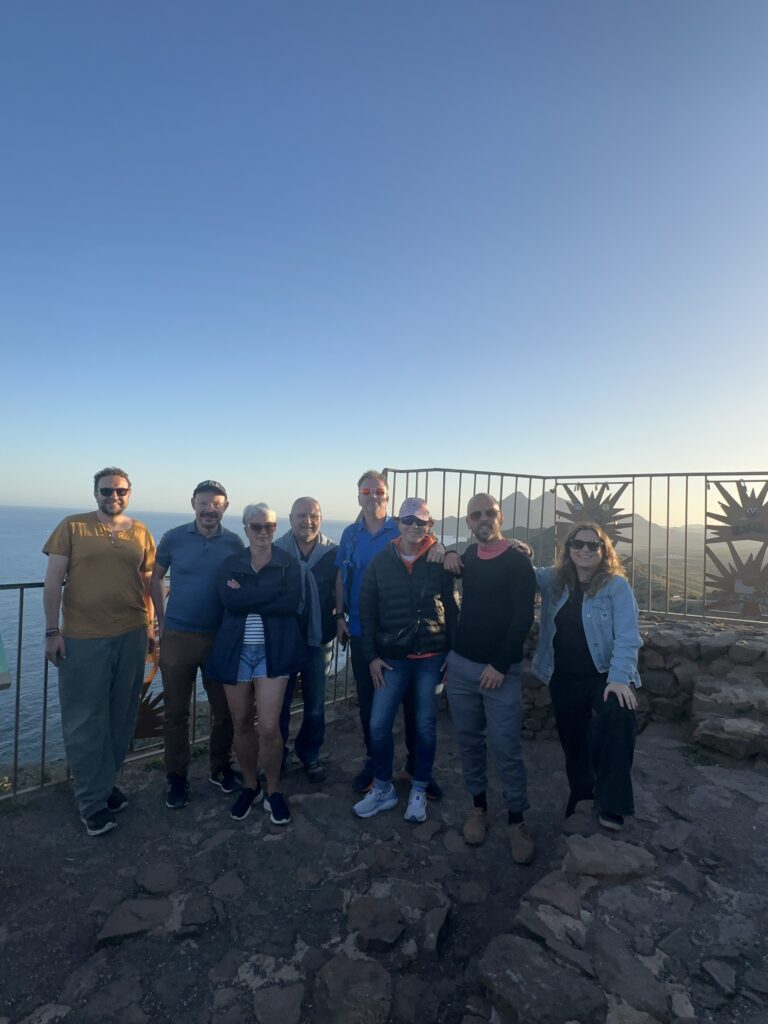
On the way back, we make one final stop at one of the best viewpoints in Almería: Mirador de la Amatista.
The views over the coastline are incredible.
Just be careful with the wind 🙂
Day 4: The Alcazaba of Almería and the City’s Museums
On day four, we decided to slow things down a bit and recover after the intensity of the previous two days.
We stay in the city and focus on discovering more of Almería’s cultural and historical heritage.
You can’t talk about Almería without mentioning its Muslim past, nor without noticing the Mudejar-style buildings scattered across the city.
The Alcazaba
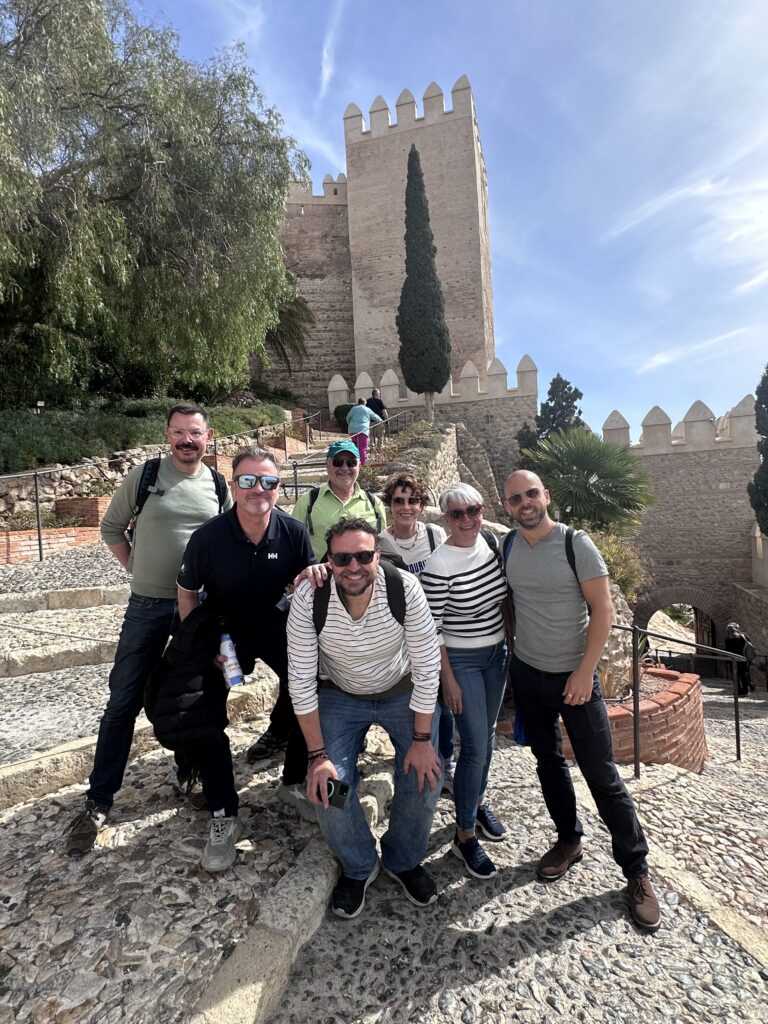
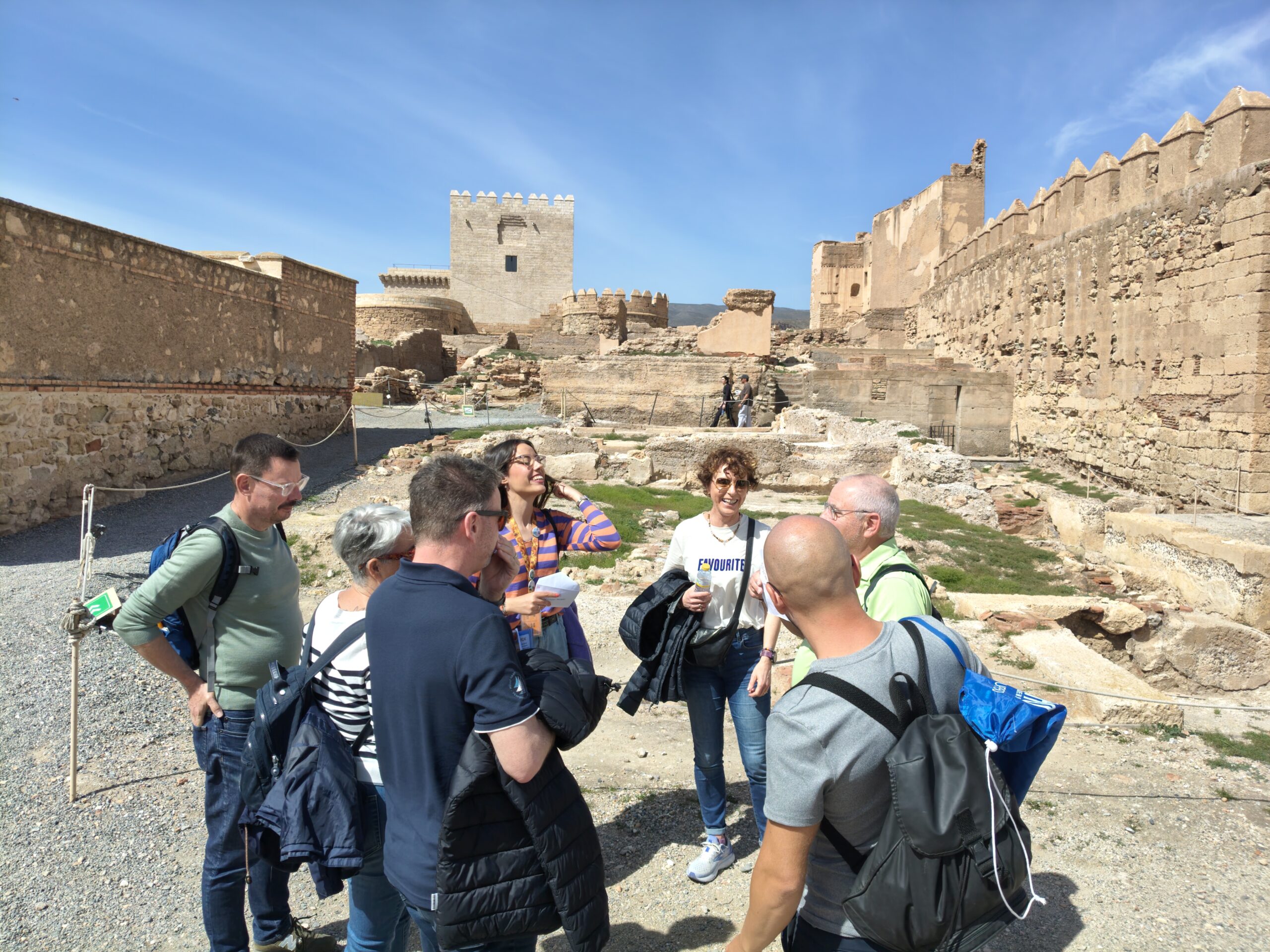
Our first stop in the morning is the Alcazaba of Almería, the ancient Muslim fortress that overlooks the city. It’s impossible to miss when you arrive.
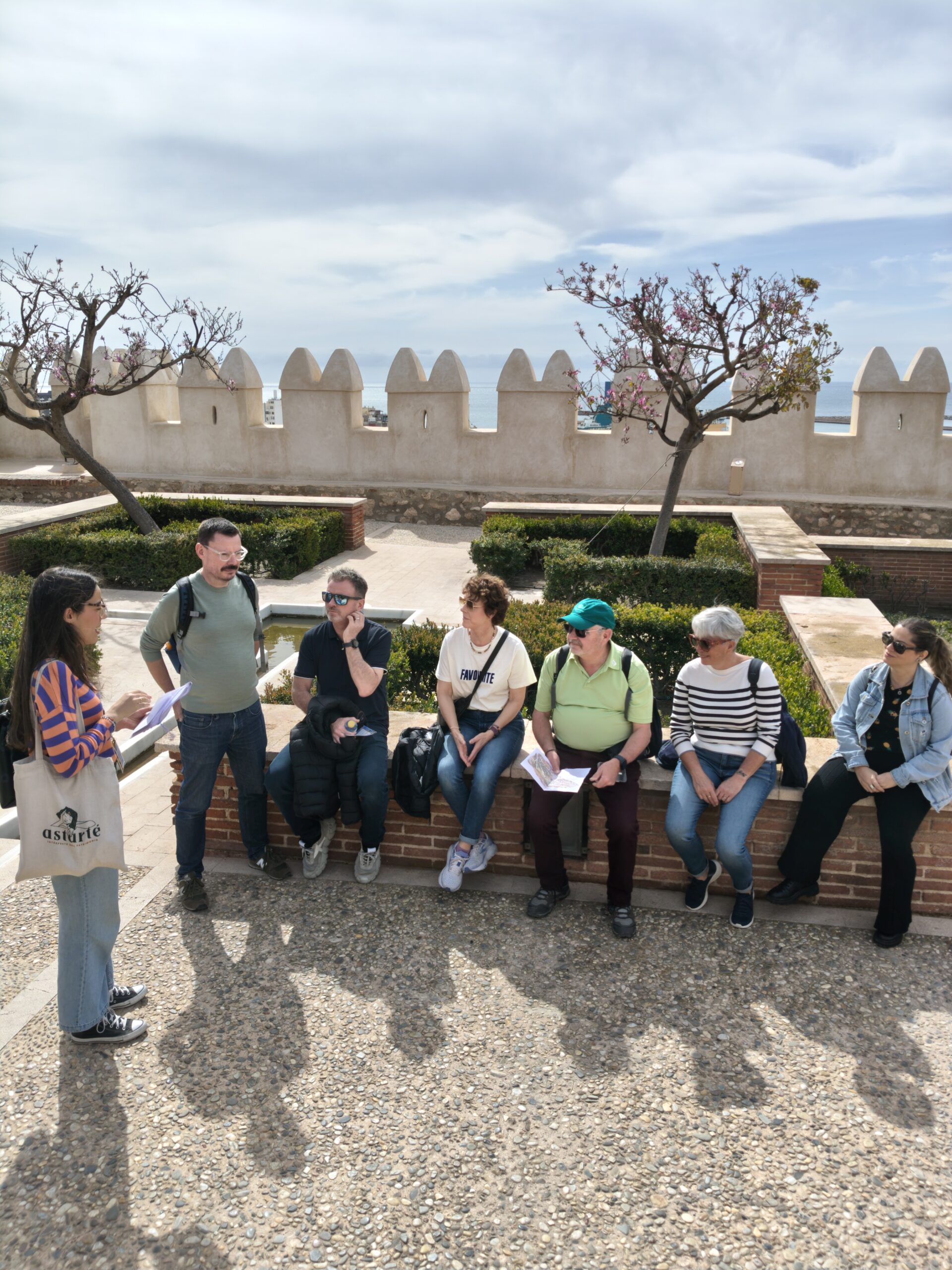
There, we meet a specialised guide who takes us through its three enclosures, explaining how the fortress was established, how it grew over time, and how it was eventually taken by the Christians in 1489—just before the fall of Granada.
Inside, you’ll find:
- Gardens
- Remains of houses where Muslim families once lived
- A fascinating mix of Moorish and Christian architecture
“El Americano”
After visiting the Alcazaba, we take a break. A proper Spanish break—siesta included.
Later in the day, we meet again at Kiosko Amalia, known for serving a very particular pink-coloured drink (alcoholic or non-alcoholic).
You can have it hot or cold.
And despite being called “Americano”, it has nothing to do with coffee. It’s made with:
- Kola cream
- Milk
- Cinnamon
- Sugar
- A slice of lemon peel
So why is it called “Americano”?
The story goes back to the 1960s, when one of the many American actors who came to Almería to shoot western films popularised the drink.
From there… I’ll let you figure out the rest.
Museo Doña Pakyta
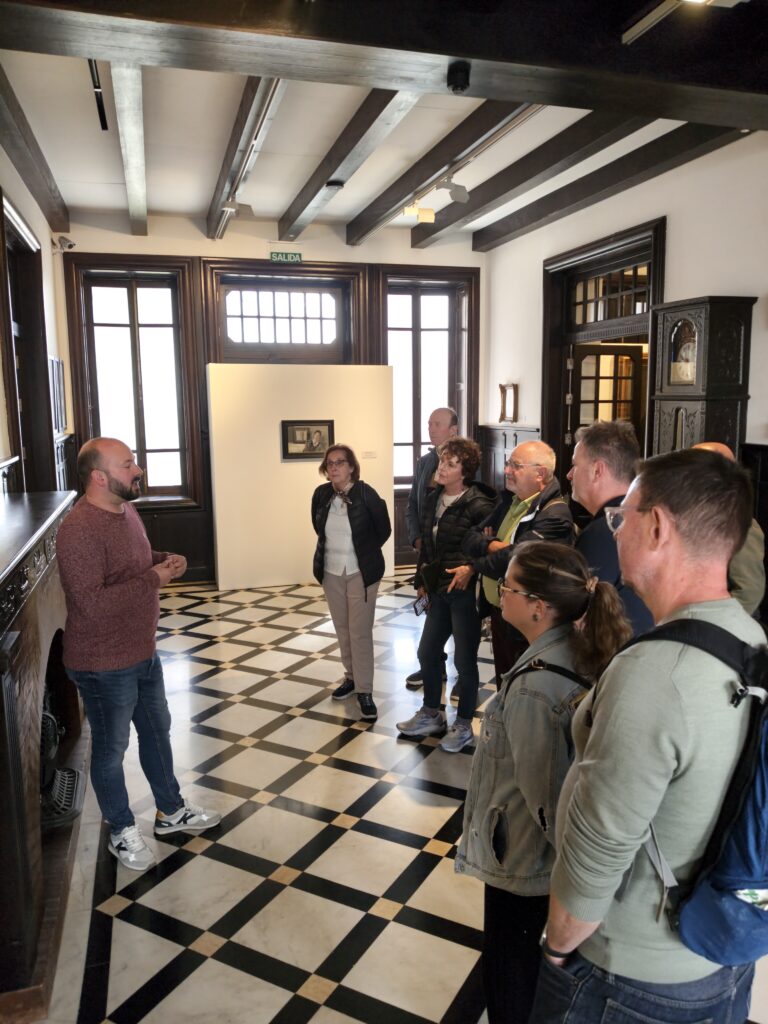
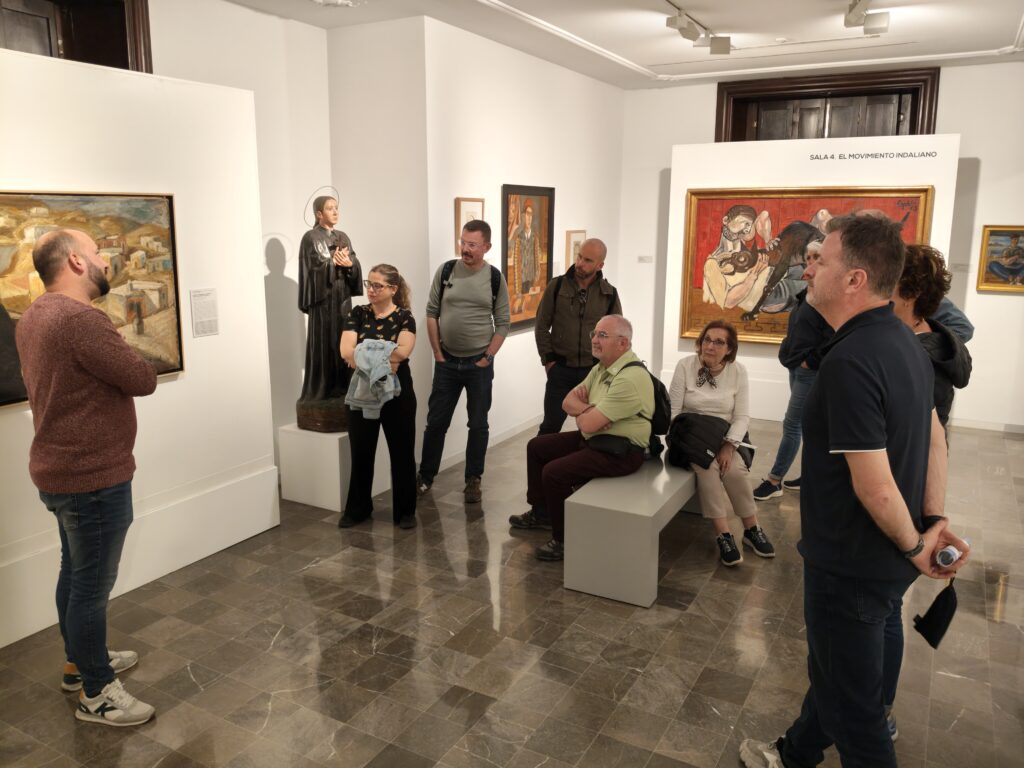
We finish this cultural (and slightly alcoholic) day by visiting one of the city’s most important museums: Museo Doña Pakyta.
Rumour has it that Pakyta herself had a connection with Franco, but what really matters here is the art.
Inside, you’ll find an important collection of Indaliano art, an artistic movement that emerged in the 1940s in Almería, led by Jesús de Perceval.
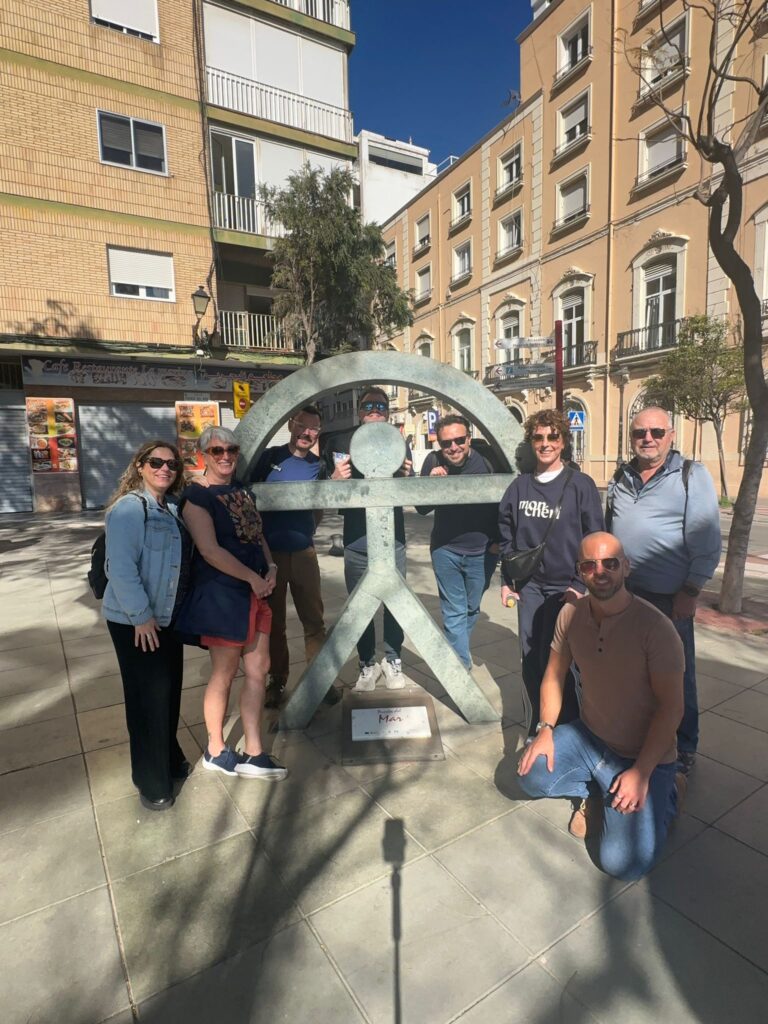
This is also where we discover the origin of the city’s symbol: El Indalo.
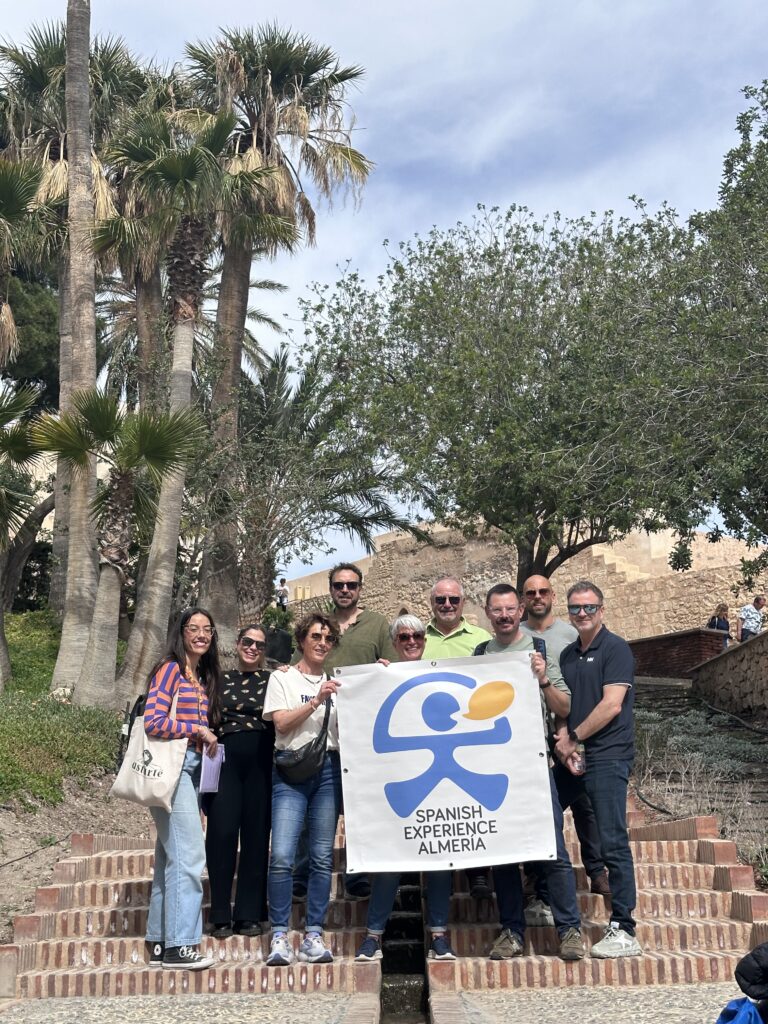
Yes—the same one we use as our company logo. The only difference is… ours speaks Spanish 🙂
Spanish Civil War Shelters
Unfortunately, we couldn’t visit them with our students because they were closed at the time. But if you have the chance, we strongly recommend it.
These are the largest underground Civil War shelters in Europe:
- 4 kilometres of tunnels (1 km open to the public)
- Capacity for up to 40,000 people during the bombings
They’ve been preserved almost exactly as they were:
- Children’s drawings on the walls
- Personal belongings and toys
- An improvised hospital and operating room
- Even “VIP areas” for wealthier families
A curious detail: access to these shelters was originally through kiosks around the city.
Day 5: Market Visit and Tapas Cooking Workshop
By this point, they’re already exhausted. So we decide to finish the experience the best possible way: with food… and more food. That never fails.
The Central Market
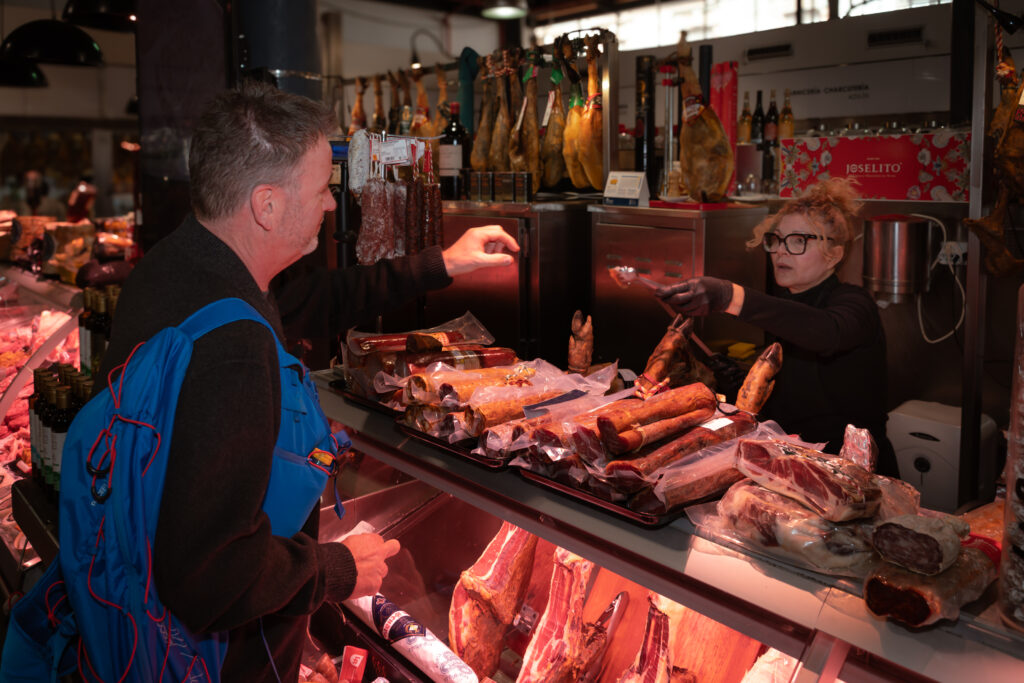
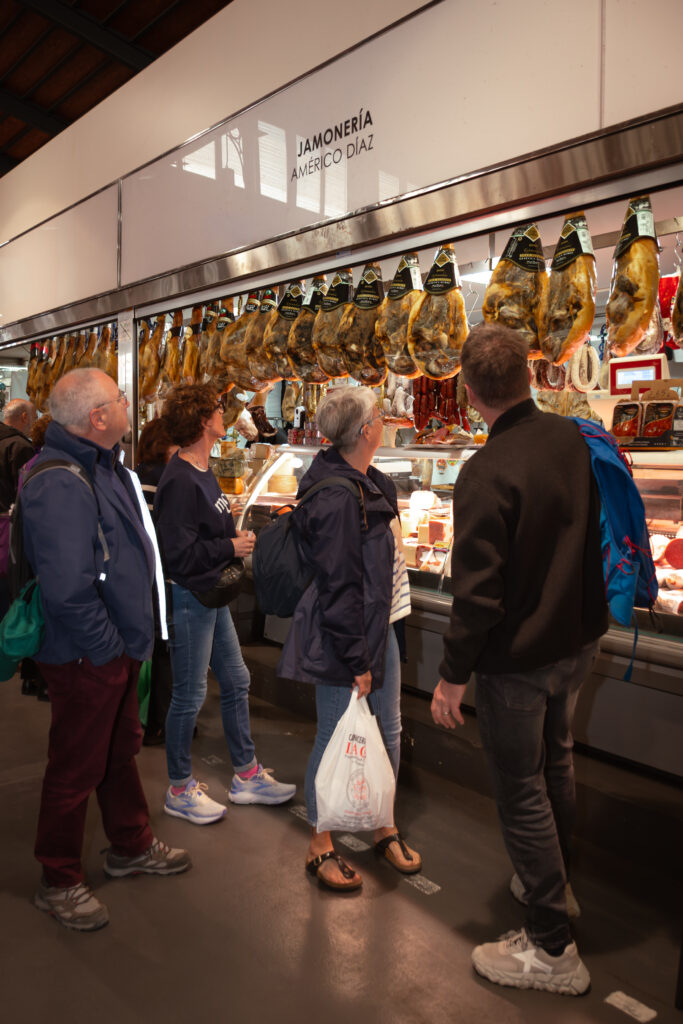
One of the best ways to practise Spanish is by using it in real-life situations, such as buying food at the local market (Mercado de Abastos).
While we’re there, we even hire a photographer to capture those moments when a foreign student walks up to a local stall and, in Spanish, manages to do their shopping.
What do they need to buy?
All the ingredients we’ll later use for the tapas cooking workshop.
The Tapas Workshop
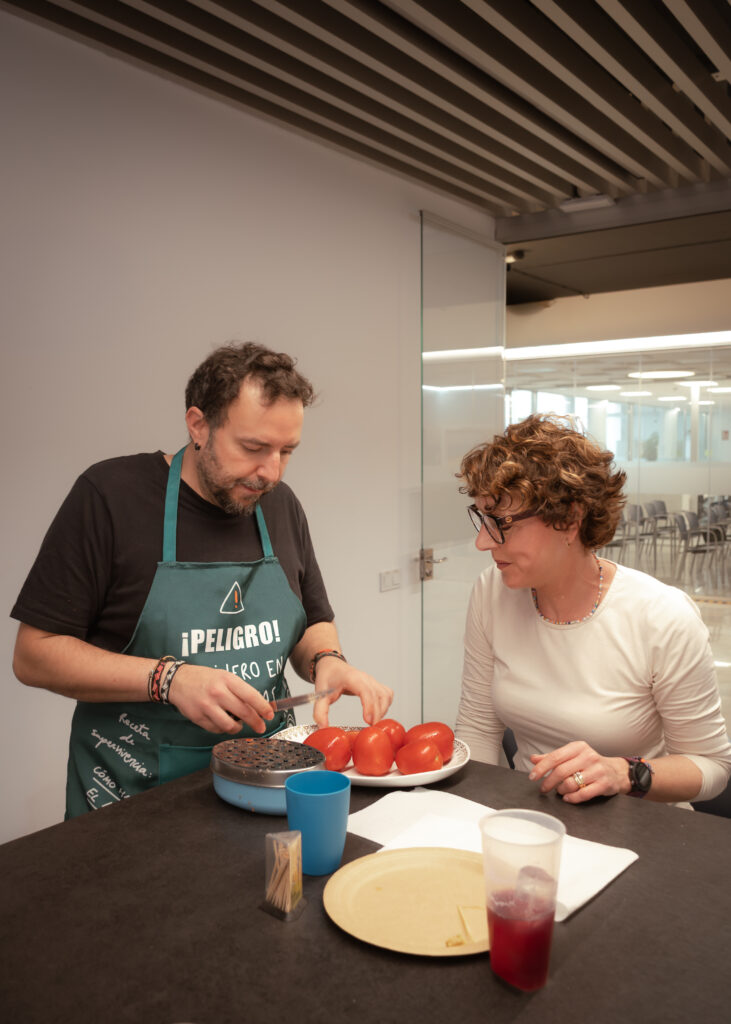
We rent a kitchen at the Chamber of Commerce and bring along everything we’ve just bought at the market.
One of our teachers — the one who loves cooking — takes the lead and shows them step by step how to prepare some of the most typical Almería-style tapas.
And then?
Well… we eat everything we’ve cooked.


Farewell Dinner
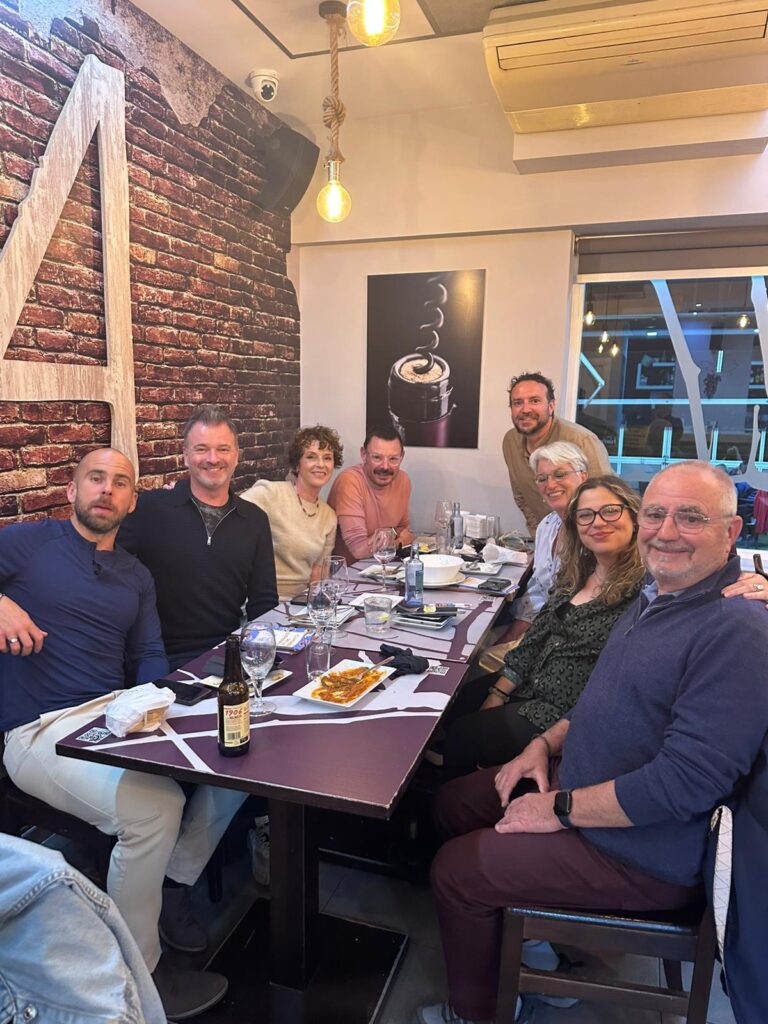
To finish the day — and the entire 5-day experience — we book a table at Vintage, a restaurant that serves vegan and vegetarian tapas (so everyone can enjoy it).
That’s where we say goodbye, and where students often surprise us with spontaneous gifts.
Honestly, you couldn’t ask for better clients than these.
More Things to Do in Almería
What I’ve just shown you is one of our 5-day programmes.
However, Almería has many more things to offer that we simply didn’t have time to include here (although we do cover them in other programmes).
If you have more days available — or want to experience the region in a different way — make sure to include some of these places in your trip and get ready to enjoy nature to the fullest.
Mojácar
Níjar is one of the most beautiful white villages in the area. But Mojácar (a bit further from the capital) might be even more impressive.
It offers:
- 17 km of beaches
- A stunning old town
- A lively nightlife scene, especially in summer
There’s also a local rumour that Walt Disney was adopted by a family from Mojácar and spent part of his childhood there. In fact, if you visit the town, you’ll likely come across drawings and references to the Disney world.
Pulpí Geode
Have you ever seen giant gypsum crystals?
The Pulpí Geode is the largest accessible geode in the world filled with gypsum crystals. It was discovered in 1999 and can be visited with a ticket.
Alpujarra of Almería
Who said Almería is all about beaches?
Between the Sierra Nevada and the Sierra de Gádor lies this mountainous region.
Here you’ll find:
- Hidden villages
- Natural parks
- Wine tastings
- Endless mountain activities
So if you’re more into mountains than beaches, you’ll have kilometres of outdoor exploration ahead (bring warm clothes!).
Laujar de Andarax
If we had to highlight one place in the Alpujarra, it would be Laujar de Andarax, known as the last court of Boabdil.
Like many villages in the area, it stands out for:
- Wine culture (plenty of wine tourism)
- Hiking routes (don’t miss the “16 fountains” route)
- Historic villas
- The source of the Andarax River
Nature, peace and outdoor activities all in one place.
Sorbas Caves
If the Pulpí Geode is about crystals, the Sorbas Caves are about underground formations.
There are over 1,000 caves carved in gypsum by water, where you’ll see:
- Stalactites
- Stalagmites
All creating a bright and unique underground landscape.
Roquetas de Mar
Back to the coast.
If you’re looking for a slightly more urban beach atmosphere after Almería city, head to Roquetas de Mar (less than 70 km away).
There you’ll find:
- Beaches like Las Salinas and La Romanilla
- Water parks
- Golf courses
- The well-known Santa Ana Castle
Isleta del Moro
A quiet fishing village in the Níjar area, known for:
- White houses
- Colourful boats
- Crystal-clear water
Perfect if you enjoy diving, fresh fish and a peaceful environment.
The Best Beaches in Almeria
There are so many unspoilt beaches and coves along the Almeria coastline that it’s impossible to list them all.
In many of them, you won’t see a single tourist outside the summer season. You can even swim in months like April or October without any problem.
Besides El Playazo de Rodalquilar and Isleta del Moro, make sure to mark these on your map:
- Playa de los Muertos
- Playa de los Genoveses
- Playa de Mónsul
- Cala de Enmedio
- Cala Rajá
If you ever visit them, some of them might look familiar — many films and series have been shot here.
Cabo de Gata Natural Park
By now, you’ve probably heard a lot about Cabo de Gata — and for good reason.
A 5-day trip barely scratches the surface. In my opinion, it’s the true jewel of Almería.
It offers:
- Volcanic landscapes
- Arid terrain (a striking contrast between brown land and crystal-blue water)
- Wild beaches
- UNESCO Biosphere Reserve and Geopark status
It’s not just about beaches — you’ll also find breathtaking cliffs like Arrecife de las Sirenas.
So if you’re into:
- Ecotourism
- Hiking
- Diving
- Kayaking
- Sailing
- Photography
…this is your place.
Tip: bring your own vehicle — public transport doesn’t reach most of these spots.
Hiking in Almería
As someone who enjoys walking, I can’t finish without recommending hiking routes across the province.
There are too many to name just one.
That’s the beauty of Almería:
- If you want mountains → you have mountain routes
- If you want coastal walks → head to Cabo de Gata
- If you want something different → explore the desert
As I usually recommend, take a look at routes on Wikiloc to find one that suits you.
Book a Spanish Experience with Us
As mentioned at the beginning of the article, we decided some time ago to build a business around Spanish immersion experiences, for students who want to discover this part of Spain while practising the language.
If you’re a school, college or academy with a group of students interested in joining a Spanish Experience in Almería, feel free to get in touch with us.
And if you’re an individual Spanish learner, subscribe below so we can let you know when we open new spots for the next experience.
You have not enough Humanizer words left. Upgrade your Surfer plan.
Deja una respuesta